Are you confused about UK tax laws and how VAT rates affect your business? Knowing about UK VAT rates can really help entrepreneurs, financial experts, and business owners. It’s key to understanding the British tax system.
Value Added Tax (VAT) is a big part of UK taxes. It has different rates that can change how you price things, follow rules, and plan your finances. Whether you run a small business or work in finance, getting the hang of UK VAT rates is crucial. It helps keep your finances in order and avoids problems.
This detailed guide will clear up the UK VAT rates system. We’ll look at standard, reduced, and zero rates. You’ll learn how these rates work for different items and services. This knowledge will help you make smart tax decisions and run your business well.
Our guide covers the basics and how to apply them in real life. You’ll get the tools to handle UK tax laws and VAT rules with confidence.
Understanding Value Added Tax in the United Kingdom
Value Added Tax (VAT) is a key part of the UK’s tax system. It affects both businesses and people who buy things. Knowing about uk vat rates and how to follow business tax rules is vital for any UK company.
VAT follows the value added at each step in making and selling goods. Companies that pay VAT must charge it on what they sell. They also get back VAT on what they buy. This makes sure tax is collected fairly and helps the government.
- VAT applies to most goods and services
- Businesses collect and remit VAT to HMRC
- Different VAT rates exist for various product categories
Your business tax compliance duties include:
- Registering for VAT when your turnover goes over the limit
- Keeping accurate financial records
- Filing VAT returns on time
- Working out and paying the right VAT amount
The standard VAT rate affects how businesses price their goods. They need to keep track of the VAT they pay on what they buy and charge on what they sell. This helps them report correctly and get back as much tax as possible.
Understanding uk vat rates needs a lot of attention to detail and knowing HMRC rules well. By being well-informed and proactive, you can handle your tax duties well and keep your finances in good shape.
The Standard Rate of VAT: What You Need to Know
Understanding the standard rate of VAT is key for businesses and consumers in the UK. It’s currently 20%. This rate covers most goods and services in different sectors.
The standard rate of VAT is the main tax for most business deals. Most products and services fall under this rate. Some items, however, have lower or no VAT.
Goods and Services Subject to Standard Rate
Many items are charged at the standard VAT rate. These include:
- Electronics and electrical goods
- Clothing and fashion accessories
- Restaurant and catering services
- Professional consulting services
- Most non-essential consumer products
How the Standard Rate Affects Your Business
The standard rate of VAT affects your business. You must add 20% tax on sales. This changes your pricing and financial plans.
| Business Impact | Considerations |
|---|---|
| Pricing Strategy | Include VAT or display separately |
| Accounting Processes | Accurate VAT calculation and reporting |
| Cash Flow Management | Account for VAT collection and remittance |
Businesses must register for VAT if their sales are over £85,000. This ensures they follow HMRC rules on VAT.
Reduced Rate VAT UK: When Lower Rates Apply
Understanding the reduced rate VAT UK can save your business a lot of money. The current rate is 5%. It’s a big help for certain goods and services that meet specific criteria.
It’s key to know which items get the reduced rate VAT UK. This is important for businesses looking to save on taxes. The reduced rate is for several important categories:
- Children’s car seats and safety equipment
- Home energy supplies and heating fuel
- Mobility aids for elderly and disabled individuals
- Specific residential renovation and conversion work
Some things to remember about reduced rate VAT UK include:
- Energy-efficient home improvements often qualify
- Certain medical and accessibility products get a better deal
- Temporary measures might add more items to the reduced rate list
Businesses need to check their products and services for VAT. Misclassifying can lead to unexpected tax bills. Getting advice from tax experts is a good idea to stay on track and save money.
Always check the latest from HMRC. The rules for reduced rate VAT UK can change. Staying up-to-date helps avoid financial problems and makes sure you’re using all tax benefits.
Zero Rated Items and Their Tax Treatment
Understanding VAT can be tricky for businesses. Zero rated items in the UK tax system offer big benefits for companies and customers.
Zero rated items are goods and services that have VAT but are charged at 0%. This means you don’t pay tax on sales. But, you can still get back VAT on what you bought – a big plus for businesses.
Common Zero Rated Goods and Services
Knowing which items are zero rated helps with tax management. Here are some main categories:
- Most basic food items
- Children’s clothing and footwear
- Books and newspapers
- Public transport services
- Prescription medications
- Exports of goods outside the EU
Distinguishing Between Zero Rated and Exempt Supplies
Many businesses get zero rated and exempt supplies mixed up. But, it’s important to know the difference. Zero rated items let you get back VAT on expenses. Exempt supplies don’t.
With zero rated items, you can claim back VAT on business costs. This is better than exempt supplies.
Always talk to a tax expert to make sure you’re classifying your goods and services correctly. This ensures you get the right VAT treatment.
UK VAT Rates Across Different Categories
Understanding VAT rates can be tricky for businesses in different fields. It’s key to know how HMRC VAT rules apply to various products and services. This knowledge is vital for correct tax payment.
The UK’s VAT system groups goods and services into different rate bands. This affects your business’s finances a lot. Knowing the right rate for your industry helps avoid mistakes and ensures you report taxes correctly.
- Food and Beverages
- Cold takeaway food: Zero rate
- Hot prepared meals: Standard rate
- Restaurant dining: Standard rate
- Construction Services
- New residential builds: Zero rate
- Property renovations: Reduced rate
- Commercial construction: Standard rate
HMRC VAT guidelines have specific rules for different business types. It’s important to understand these rules well. Some areas have special VAT rules that need careful thought.
| Business Sector | VAT Rate | Key Considerations |
|---|---|---|
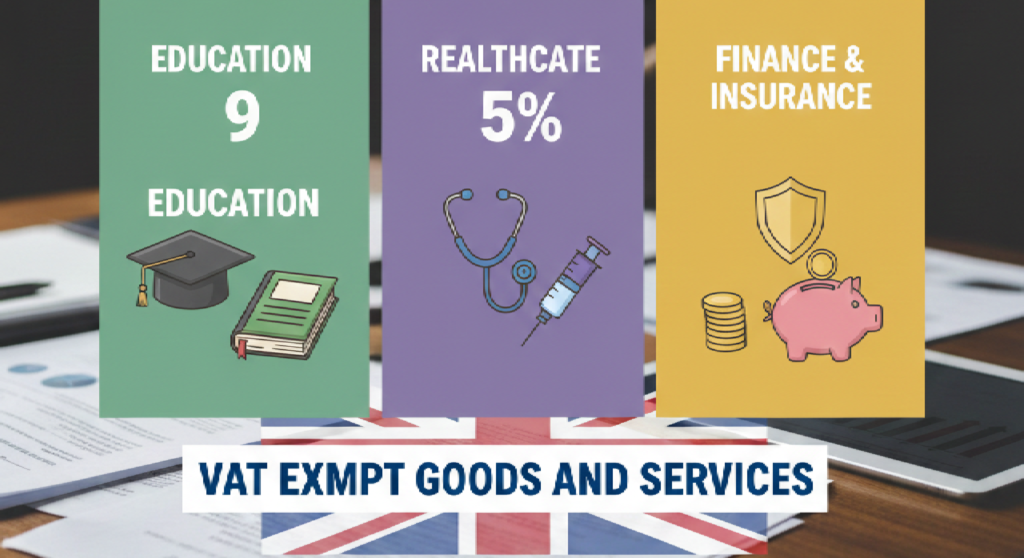
| Healthcare Services | Exempt | Medical treatments usually not taxed |
| Educational Services | Exempt | Most educational activities are not taxed |
| Digital Products | Standard Rate | Online services are taxed at the current rate |
By looking at these categories and checking the latest HMRC VAT guidelines, you can keep your business in line. This ensures you pay the right amount of tax.
VAT Exemptions: What Falls Outside the VAT System
Understanding vat exemptions is key for businesses in the UK. Some goods and services don’t pay VAT, which can change how you plan your finances.
Vat exemptions cover certain supplies where no VAT is charged. They are different from zero-rated items. These exemptions are for important sectors the government supports.
Exploring Exempt Categories
Important vat exemptions include:
- Financial services and insurance products
- Educational services by recognised institutions
- Healthcare by registered medical professionals
- Certain property sales and rentals
Critical Implications of Exempt Status
Businesses with exempt supplies can’t get back VAT on related costs. This can make your costs higher than for zero-rated supplies.
Being VAT registered might change if most of your sales are exempt. Keeping track of these supplies is vital. It ensures you follow HMRC rules and manage your taxes well.
Navigating VAT Registration Threshold and Compliance Requirements
Knowing the VAT registration threshold is key for UK businesses. The current limit is £85,000 in taxable turnover over 12 months. When your business hits this mark, you must act fast to follow HMRC rules.
Keep a close eye on your business’s sales. The VAT threshold is based on the total value of taxable supplies. This includes:
- Standard-rated goods and services
- Reduced-rate supplies
- Zero-rated items
Important things to remember about the vat registration threshold are:
- Exempt supplies don’t count towards the threshold
- You must register within 30 days of going over the limit
- You can choose to register voluntarily even if you’re below the threshold
Choosing to register voluntarily can help you claim back VAT and look more professional. But it also means more paperwork and tasks.
| Threshold Consideration | Key Details |
|---|---|
| Current VAT Threshold | £85,000 |
| Registration Timeframe | Within 30 days of exceeding threshold |
| Voluntary Registration | Possible below £85,000 |
Not registering when you should can lead to big fines. HMRC might make you pay VAT from the past and fine you. Be proactive and get expert advice to handle these rules well.
Managing Your VAT Return Filing and HMRC Guidelines
Managing vat return filing can be tough for UK businesses. It’s key to understand business tax rules well. This helps keep your finances smooth and avoids HMRC penalties.
VAT Return Deadlines: Staying on Track
Meeting your VAT return deadlines is vital. You usually have a month and seven days to submit returns and pay VAT after each period. Missing these can cost a lot.
- Submit returns electronically through compatible software
- Pay any outstanding VAT within the specified timeframe
- Maintain accurate digital records
Essential Record Keeping for Compliance
Keeping good records is crucial for tax compliance. HMRC wants businesses to keep records for at least six years. This includes:
- Sales invoices and receipts
- Purchase records
- VAT accounts and calculations
- Supporting evidence for return figures
Good records help during HMRC checks and ensure accurate vat returns. Digital record keeping is now a must under Making Tax Digital (MTD). Businesses must use approved software for tracking and reporting.
Being organised and proactive helps simplify tax tasks. It also reduces the chance of errors or penalties.
Conclusion
Knowing about UK VAT rates is key for keeping your business tax in order. The main VAT rates are standard (20%), reduced (5%), and zero (0%). These rates are important for your financial reports and tax duties.
Your business’s success relies on using these rates correctly for different goods and services. It’s crucial to know the difference between zero-rated and exempt supplies. This affects your VAT recovery and financial plans.
HMRC’s rules can change often, especially after Budget announcements. It’s important to stay updated and proactive in VAT rules. Keep up with official sources, keep detailed records, and file VAT returns on time to avoid fines.
VAT might seem complex at first, but understanding it well helps you handle your tax duties with confidence. For tricky cases, think about getting help from tax experts. This ensures your business tax compliance is accurate and current.