Did you know that dealing with VAT for nonprofits and charities is more complex than you might think? Many charities believe they are completely free from tax issues. But the truth is much more detailed.
Handling VAT for nonprofits and charities needs careful planning. Your charity might get special tax breaks. But you still have to follow important rules. This guide will explain the complex VAT rules for charities in the UK.
Getting VAT right is not just about following the law. It’s about using your resources wisely. Saving money on VAT means more funds for your charity’s work. This can help you make a bigger difference in the world.
This guide is for all charities, big or small. It will give you the tools to understand HMRC rules, find tax savings, and keep your charity financially strong and legal.
Understanding VAT Obligations for Charitable Organisations
Understanding VAT can be tough for charities. They focus on helping others but must follow financial rules. Knowing how VAT rules apply to your charity is key.
What Sets Charities Apart in VAT Considerations
Charities are different from regular businesses. They aim to make a social difference, not to make money. This changes how HMRC rules them.
- Non-profit status influences VAT treatment
- Specific charity tax exemptions may apply
- Economic activities can still trigger VAT obligations
Legal Framework for Charitable VAT
It’s vital to know the legal side of VAT for charities. HMRC has special rules for charities. They explain how VAT works for them.
| VAT Aspect | Charitable Organisation Impact |
|---|---|
| Registration Threshold | £85,000 annual turnover |
| Partial Exemption | Special calculations may apply |
| Fundraising Income | Specific VAT treatment |
Your charity needs to watch its money closely to follow VAT rules. Charity tax exemptions do not automatically mean complete VAT exemption. Every money move must be checked for VAT rules.
VAT for Nonprofits and Charities
Understanding VAT for nonprofits and charities is complex. It’s crucial for your organisation’s financial health. Knowing the different VAT treatments for your activities is key.
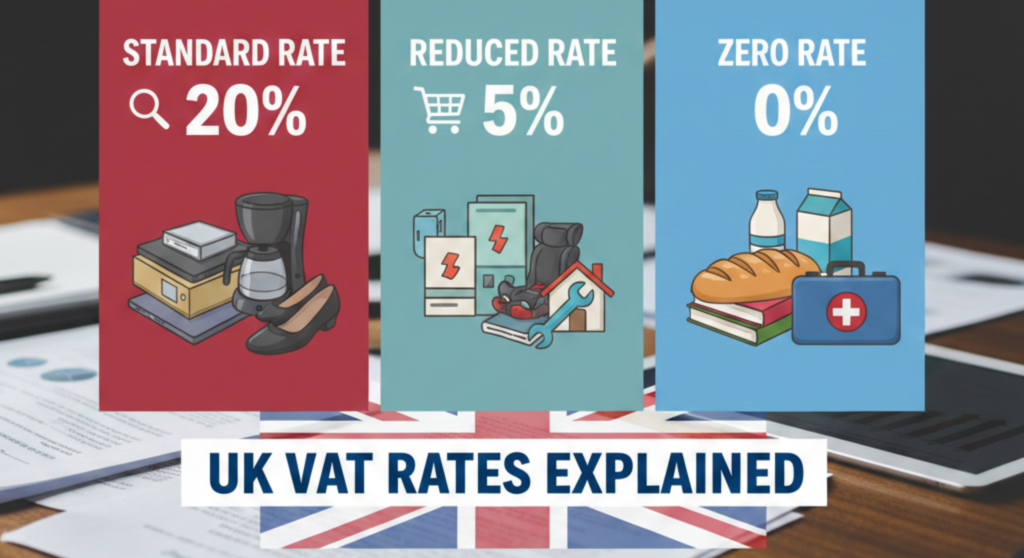
Charities face three main VAT treatments. These affect their finances greatly:
- Standard-rated supplies (charged at 20%)
- Reduced-rated supplies (charged at 5%)
- Zero-rated or exempt supplies (charged at 0% or outside the VAT system)
Your charity’s VAT status depends on several factors. These include the type of supplies, who you give them to, and your structure. Many charities have a mixed VAT status. They handle both taxable and exempt activities.
| Charity Type | Typical VAT Considerations |
|---|---|
| Charity Shops | Potentially standard-rated sales |
| Educational Services | Often zero-rated or exempt |
| Healthcare Facilities | Mixed VAT treatment |
| Research Organisations | Specific VAT exemptions possible |
Grasping VAT for nonprofits is more than just following rules. It’s about smart financial planning. Some income, like membership fees or training, might have VAT. But your main charitable work could be VAT-free.
By closely examining your activities, you can find the best way to handle VAT. This will help your organisation save money.
Charity Tax Exemptions and VAT Relief Schemes
Understanding VAT can be tough for voluntary groups. Knowing about vat relief for charities helps them use their money better and pay less tax.
Charities get special tax breaks that help a lot. These breaks can cut down costs and let more money go to your main goals.
Qualifying for VAT Relief as a Voluntary Organisation
To get vat relief, your charity must meet certain rules set by HMRC. The main rules are:
- Being a registered charity
- Focusing mainly on non-profit activities
- Following HMRC’s charity rules
- Keeping good records and documents
Zero-Rated Supplies Available to Charities
Charities can use zero-rated supplies, which means they can charge 0% VAT and get back the tax they paid. These include:
- Talking books for people who can’t see
- Medical gear paid for by charities
- Lifeboats and rescue tools
- Goods donated and sold in charity shops
Knowing about these VAT relief options can help your group use its money wisely. This way, you can keep making a big difference in your community.
When Your Charity Needs to Register for VAT
Understanding VAT registration for charities can be tricky. Your charity must watch its finances closely to know when to register for VAT.
The VAT registration threshold is £85,000 in taxable supplies over 12 months. Not all income counts. Donations, grants, and some fundraising don’t add to this total.
- Keep an eye on taxable supplies all the time
- Don’t count exempt income in VAT calculations
- Check your financial records every quarter
Voluntary VAT registration might help your charity in certain cases. If you pay a lot of VAT on purchases, registering can help you get back some of that money. This could make your finances better.
To register, you’ll need to give HMRC lots of info about your charity. You’ll need to show your financial setup, how you make money, and what VAT-able supplies you have.
Important things to think about when registering for VAT include:
- Accurately tracking taxable income
- Knowing the different VAT rates
- Being ready to submit VAT returns regularly
Not registering on time can lead to fines. Be ahead of the game by checking your charity’s finances and VAT duties often.
Navigating HMRC Charity Regulations
It’s vital to know HMRC charity rules to keep your organisation legal and financially sound. As a charity, you face a complex set of rules. These rules help keep things transparent and fair.
When you’re dealing with HMRC charity rules, your organisation has to do a few important things:
- Maintain accurate financial records
- Demonstrate proper use of charitable funds
- Comply with VAT reporting requirements
- Ensure transparent financial management
Compliance Requirements for Charitable Bodies
Your charity must follow certain rules set by HMRC. These rules include keeping detailed records of money coming in and going out. You also need to:
- Register all financial transactions
- Prepare comprehensive annual reports
- Submit accurate VAT returns
- Verify eligibility for tax exemptions
Record-Keeping Obligations Under HMRC Rules
HMRC says charities must keep financial records for at least six years. Good records help protect your charity during checks and show you’re responsible to donors and trustees.
Important records to keep include:
- Sales and purchase invoices
- Bank statements
- VAT accounting documents
- Evidence supporting tax relief claims
By managing your financial records well and knowing HMRC charity rules, you’ll keep your organisation in good standing. This makes it trustworthy to donors and others.
Fundraising Activities and VAT Implications
Understanding VAT rules for fundraising can be tough for charities. It’s key to know how VAT affects different ways of raising money. This helps keep finances in order and follows the law.
Each fundraising activity has its own VAT rules. Here are some important points to remember:
- Donations usually don’t have VAT
- Some charity events might need special VAT rules
- Ticket sales for events could be taxed
Your charity needs to think about VAT for each activity. Sponsored events usually don’t have VAT if there’s little recognition. Charity auctions are more complex, with VAT depending on the items and how the auction is run.
Here are some fundraising examples to consider:
- Charity dinners and balls (tickets might have standard VAT)
- Cultural events that might not have VAT
- Raffles and lotteries with special VAT rules
Your fundraising plan should be smart about taxes, but also keep donors happy. Getting expert advice can help you deal with VAT rules well. This keeps your charity’s finances strong and supports your mission.
Maximising Tax-Efficient Charitable Donations Through Gift Aid Recovery
Charities can get more money by using gift aid recovery and tax-efficient donations. Knowing how to use these tools helps them get more help from donors.
Gift Aid is a key way for UK charities to raise more money. It lets them get tax back on donations, so each gift is worth more without costing donors extra.
How Gift Aid Interacts with Donation Processes
When people give money, charities can get tax back from HMRC. The gift aid recovery process has a few important steps:
- Check if the donor pays tax
- Get the right forms from donors
- Work out how much tax to claim
- Send the claim to HMRC
Optimising Donor Contributions for Maximum Tax Efficiency
To make donations more tax-efficient, try these tips:
- Ask donors to sign Gift Aid declarations
- Explain the tax benefits clearly
- Plan fundraising events to follow gift aid rules
- Keep your finances clear and open
Using these methods helps charities find steady funding. It also lets donors get tax relief.
Understanding VAT Partial Exemption for Charities
For charities, dealing with VAT partial exemption can be tough. If your charity does different things, it’s key to get VAT partial exemption right. This helps with managing your finances.
VAT partial exemption kicks in when your charity makes both taxable and exempt income. You’ll have to figure out which VAT you can get back. This depends on what your charity does.
- Taxable supplies include standard commercial activities
- Exempt supplies cover welfare, educational, and healthcare services
- Mixed activity charities need to do VAT accounting carefully
To work out VAT partial exemption, you find out how much taxable income you have. Then, you use this to get back some of the VAT you paid.
Important things to think about with VAT partial exemption include:
- Keeping track of all your income
- Knowing about HMRC’s de minimis rules
- Having detailed financial records
Charities might make VAT partial exemption easier by meeting certain HMRC rules. Getting advice from a charity accountant can really help with these rules.
Conclusion
Managing VAT for nonprofits and charities needs careful planning and attention. Your success depends on knowing the tax rules well. This way, you can keep your main mission alive while looking after your finances.
Being proactive is key to managing VAT well. Check your charity’s money, where it comes from, and VAT issues often. Getting help from tax experts who know charities can spot ways to save money and avoid mistakes.
VAT for charities is more than just following rules. It’s about being smart with money. Use HMRC’s advice, go to workshops, and keep up with tax changes. This way, your charity can use its resources better and help the community more.
Your charity’s financial health is all about smart tax planning. With good VAT knowledge, you can turn challenges into chances for growth and more social impact.
FAQ
Do all charities automatically qualify for VAT exemption?
No, not all charities get VAT exemption automatically. Charities get tax breaks, but VAT rules vary. Some supplies might be standard-rated, zero-rated, or exempt, based on what you offer.
When does my charity need to register for VAT?
You must register for VAT if your taxable supplies hit £85,000 in 12 months. Only taxable supplies count, not donations or grants. Registering voluntarily can help if you spend a lot on VAT-able items.
How does Gift Aid interact with VAT?
Gift Aid and VAT are different. Gift Aid lets you claim back basic rate tax on donations. VAT is for goods and services. A donation can’t be for a supply. You must manage supporter relationships carefully to use both Gift Aid and VAT well.
What is VAT partial exemption for charities?
Partial exemption happens when you make both taxable and exempt supplies. You can’t reclaim all VAT, only on taxable activities. You’ll figure out how much to reclaim based on your supplies.
Can charity fundraising events be subject to VAT?
Yes, fundraising events can have complex VAT rules. For example, charity dinners might be standard-rated. Sponsored events are usually VAT-free. Auctions and ticket sales depend on what’s offered.
What records must my charity keep for VAT purposes?
Keep financial records for six years, including invoices and bank statements. These are key for HMRC compliance and protecting your charity.
Are there any zero-rated supplies available specifically for charities?
Yes, charities can get zero-rated supplies like talking books and medical equipment. You can also sell donated goods in charity shops without VAT.
How do I prove my charity’s eligibility for VAT reliefs?
Show your charity status and meet HMRC’s criteria. Keep proper documents and be ready to prove your activities during HMRC checks.