Filing VAT Returns in the UK can feel overwhelming for many business owners. It often seems like a complicated puzzle, especially if you’re new to VAT.
Filing VAT returns is a crucial responsibility for any VAT-registered business. This guide will walk you through each step of the VAT return process, helping you stay compliant with HMRC rules and avoid costly penalties.
Whether you’re just starting out or have years of experience, understanding how to file VAT correctly can save time, reduce stress, and keep your finances in order.
Understanding VAT Returns and Your Obligations
For UK businesses, VAT returns can seem overwhelming. It’s key to know your duties to stay in line with VAT rules and avoid fines. This guide will cover the basics of VAT returns you need to understand.
What is a VAT Return?
A VAT return is a vital document for your business’s tax duties. It shows the VAT you’ve charged customers and the VAT you’ve paid to suppliers. It works out if you owe HMRC money or if you’re due a refund.
- Tracks VAT collected from sales
- Records VAT paid on purchases
- Calculates net VAT liability
Who Needs to File VAT Returns?
Not every business must file VAT returns. It depends on your turnover and if you’re registered for VAT. Usually, you need to register for VAT if your taxable turnover is over the current limit.
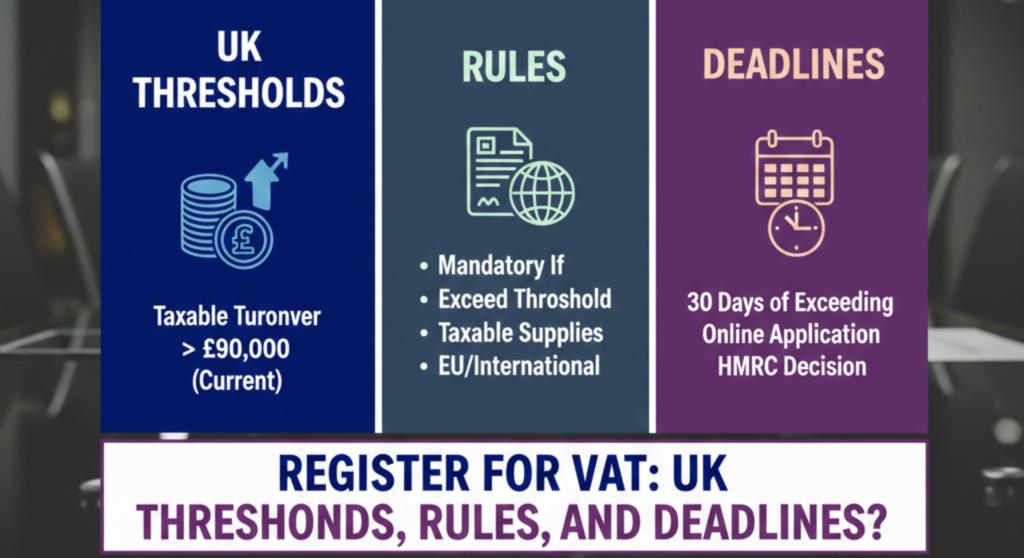
VAT Registration Thresholds in the UK
Knowing the VAT registration limits is key for accurate VAT returns. Here’s a quick guide:
| Turnover Bracket | VAT Registration Requirement |
|---|---|
| Below £85,000 | Voluntary registration |
| £85,000 and above | Mandatory registration |
Keeping up with these limits helps you follow UK VAT rules. Managing your VAT duties well can prevent issues with VAT returns.
Preparing Your Business for VAT Submission
Filing VAT returns needs careful planning and preparation. Start by setting up a strong financial management system. This will help with VAT reporting and reduce errors.
Focus on creating a system for tracking and managing money. This involves several important steps:
- Set up dedicated accounting software for precise VAT tracking
- Separate business transactions with clear categorisation
- Train staff on VAT documentation requirements
- Develop consistent record-keeping practices
Choosing the right accounting tools is key for VAT return filing. Look at these factors when picking your financial management solution:
| Feature | Importance |
|---|---|
| Real-time transaction tracking | Essential for accurate VAT reporting |
| Automated VAT calculation | Reduces manual calculation errors |
| Digital record storage | Simplifies audit and compliance processes |
Using a systematic approach to VAT returns keeps you compliant and avoids penalties. Regularly check your financial records. Make sure all invoices are documented. Also, keep an eye on VAT-related transactions during each reporting period.
By spending time on preparation, VAT submission becomes easier. It supports your business’s financial health.
Essential VAT Record Keeping Requirements
Keeping accurate VAT records is key for any UK business with VAT registration. It ensures you follow HMRC rules and handle your taxes well.
Good vat record keeping means having detailed records of your business dealings. Being organised helps you fill out VAT returns correctly. It also shields you from tax audits.
Critical Documents for VAT Record Keeping
Your VAT records need several important documents:
- Sales invoices with VAT registration numbers
- Purchase invoices and receipts
- Credit and debit notes
- Import and export documentation
- Daily sales records for retail businesses
- Bank statements
- Annual financial accounts
Retention Periods for VAT Documentation
HMRC asks businesses to keep VAT records for at least six years after the accounting period ends. Sometimes, you might need to keep records longer.
| Record Type | Minimum Retention Period |
|---|---|
| Standard VAT Records | 6 years |
| Disputed or Complex Transactions | Up to 10 years |
| Digital Records | 6 years from submission |
Not keeping proper vat records can lead to big fines from HMRC. Using digital storage can make managing your records easier. It also helps during tax checks.
Understanding VAT Deadlines and Quarterly VAT Returns
For UK businesses, dealing with VAT deadlines can be tough. Most companies have to file quarterly VAT returns. Knowing these deadlines is key to avoid fines.
Your VAT period lasts three months. HMRC picks your VAT period when you sign up. This period sets your VAT deadlines for returns and payments.
- Standard quarterly VAT periods end on:
- 31 March
- 30 June
- 30 September
- 31 December
The main rule for quarterly VAT returns is straightforward. You must send in your return and pay any VAT owed within one calendar month and seven days after your period ends. For example, if your quarter ends on 31 March, you must pay by 7 May.
| VAT Period End Date | Return and Payment Deadline |
|---|---|
| 31 March | 7 May |
| 30 June | 7 August |
| 30 September | 7 November |
| 31 December | 7 February |
Even if you owe no VAT or expect a refund, you must still file your quarterly VAT returns on time. If the deadline is on a weekend or bank holiday, file on the last working day before it.
Being well-organised and planning ahead can help you meet your vat deadlines. This makes the quarterly VAT returns process less stressful.
Making Tax Digital for VAT: What You Need to Know
The UK tax scene has changed a lot with Making Tax Digital (MTD) for VAT. This digital change asks businesses to think differently about keeping records and sending tax info.
MTD VAT Requirements
Since April 2022, most VAT-registered businesses must follow Making Tax Digital vat rules. These new rules change how you handle your financial records and deal with HMRC.
- Digital records must be kept electronically
- VAT returns must be sent through compatible software
- Manual paper records are no longer okay
The main thing is to keep digital links between your accounting systems. This means data is automatically moved without typing it out by hand. It makes things more accurate and cuts down on mistakes.
Choosing Compatible Software
Finding the right MTD-compatible software is key for easy VAT compliance. Your chosen software should have:
- Automatic VAT calculations
- Digital record-keeping features
- Direct submission to HMRC
- An easy-to-use interface
Many accounting packages now have MTD-ready options. They range from free basic versions to full enterprise systems. Make sure to pick the one that best fits your business needs.
Filing VAT Returns: The Complete Process
Filing VAT returns can seem complex. But, breaking it down into clear steps makes it easier. Understanding each stage helps you feel more confident.
Your VAT return involves several key steps. You need to gather all financial documents and calculate your VAT liability. This is the first step in the process.
- Collect all sales and purchase invoices for the VAT period
- Calculate total VAT charged on sales
- Calculate total VAT paid on purchases
- Prepare your VAT return form
- Review calculations for accuracy
- Submit through HMRC VAT submission portal
When filing VAT returns, you’ll need to fill out specific boxes on the VAT return form. Each box asks for different information about your business’s finances.
| Box Number | Information Required |
|---|---|
| Box 1 | VAT due on sales |
| Box 4 | VAT reclaimed on purchases |
| Box 5 | Net VAT to pay or reclaim |
Accuracy is key when filing VAT returns. Double-check all calculations and have supporting documents for every entry. Mistakes can result in penalties from HMRC.
Using digital tools and accounting software can make filing VAT returns easier. It reduces errors and saves time for your business.
Using a VAT Calculator and Completing Your Return Accurately
Dealing with VAT calculations can be tough for many businesses. A good vat calculator is key for accurate financial reports and following HMRC rules.
Knowing how to calculate VAT right is vital for your business’s health. The right method saves time and avoids expensive errors.
Calculating VAT on Sales and Purchases
There are different ways to calculate VAT, each with its own method:
- Standard rate (20%): Multiply net amount by 1.20 to include VAT
- Reduced rate (5%): Multiply net amount by 1.05
- Zero-rated items: No additional VAT calculation required
A professional vat calculator makes these calculations easier, especially with many transactions. Digital tools quickly find the right VAT amount for each sale or purchase.
Common Calculation Errors to Avoid
Business owners often make mistakes that lead to wrong VAT returns:
- Using the wrong VAT rates for goods or services
- Handling exempt or zero-rated supplies wrongly
- Getting gross and net amounts mixed up
- Making rounding errors with pence
Using a reliable vat calculator can lower these risks. Double-check your work and keep detailed records to avoid HMRC penalties.
Online VAT Filing Through HMRC VAT Submission Portal
Online VAT filing might seem hard, but HMRC’s digital platform makes it easier. With Making Tax Digital, businesses must use special software for their VAT submissions. This ensures reports are accurate and easy to manage.
To start your online VAT filing, follow these key steps:
- Select MTD-compatible accounting software
- Connect your software to HMRC’s systems
- Authorise the initial connection
- Prepare your VAT return data
Your chosen software will send VAT info to HMRC securely. This method cuts down on manual entry and errors.
When you submit your VAT return, make sure you have:
- Updated software with the latest HMRC compatibility
- Accurate VAT registration details
- A stable internet connection
- Correct VAT calculations
After submitting, you’ll get an instant confirmation from HMRC. Keep this acknowledgement for your financial records. If you face technical problems, check your internet and software settings before trying again.
Remember, filing your VAT online on time and correctly is key to following HMRC rules.
UK VAT Compliance: Avoiding VAT Penalties and Making VAT Return Corrections
Understanding UK VAT compliance can be tough for businesses. It’s key to know the risks and how to fix mistakes to keep finances smooth.
Understanding VAT Penalties
The UK tax system has a strict penalty system for VAT. If you’re late with returns, you’ll get penalty points. These points can lead to big fines.
- Late submission triggers penalty points
- Reaching a threshold results in a £200 penalty
- Continued non-compliance leads to repeated £200 fines
VAT penalties can grow fast if you don’t meet HMRC rules. The penalty system includes:
- 2% penalty if VAT is 15 days late
- Additional 2% penalty at 30 days late
- 4% annual interest on outstanding VAT after 31 days
Correcting VAT Return Errors
Mistakes are common, but fixing them is vital for VAT compliance. HMRC offers clear steps for correcting errors:
- Errors under £10,000: Usually fixed on the next VAT return
- Larger errors: Need a formal notice with VAT652 form
- Voluntary disclosure can greatly reduce penalties
Acting quickly to fix errors shows you’re serious about accurate financial reports. Keep all correction records and be open with HMRC to avoid big fines.
Conclusion
Filing VAT returns might seem tough at first, but it can become easy with the right steps. Knowing your VAT duties, keeping good records, and using digital tools will boost your confidence. You’ll learn to handle your tax duties well.
Success in VAT return filing comes from being well-prepared and organised. Good accounting, the right software, and knowing HMRC rules make it easier. Always be accurate to avoid fines and keep your finances running smoothly.
Even though it might seem hard, breaking down VAT filing into smaller steps helps a lot. Regular practice, careful attention, and keeping good records make it easier. If you’re stuck, help from professionals or HMRC is just a call away.
By focusing on VAT filing best practices, you’ll improve your business’s financial health and follow the rules better. See this as a key part of managing your finances. With each filing, you’ll get better at it.