Are you unsure if your business needs to register for VAT? Knowing when to register is key for UK businesses. It’s a big step in managing your finances.
Value Added Tax (VAT) is important for UK businesses. If your turnover hits a certain level, you must sign up for VAT with HMRC. It’s not just a formality; it’s the law.
Figuring out when to register for VAT can prevent fines and keep you in line. The VAT sign-up process might look daunting. But this guide will simplify it for you.
Every business owner should know when VAT registration is needed. It doesn’t matter if you’re a sole trader, a partnership, or a limited company. Knowing the rules is essential for good financial management.
We’ll look at the VAT registration limits, how to sign up, and tips for dealing with UK business taxes. Stay tuned for more.
Understanding VAT Registration Thresholds in the UK
For business owners, understanding the UK VAT threshold is key. It shows when you must register for VAT with HMRC. This is a major financial point for your business.
Knowing the VAT registration rules helps manage your business’s money well. The VAT threshold is the highest turnover a business can have before needing to register for VAT.
Current VAT Threshold Limits
The UK VAT threshold is now £85,000. If your business’s taxable turnover hits or goes over this in a year, you must register for VAT. Use a VAT calculator to keep track.
- Threshold amount: £85,000
- Measurement period: Rolling 12-month period
- Mandatory registration when the threshold is reached
How to Calculate Your Taxable Turnover
To figure out your taxable turnover, you need to look at your sales. A VAT calculator can help you see if you’re getting close to the VAT threshold.
| Turnover Type | Included in Calculation |
|---|---|
| Standard-rated sales | Yes |
| Zero-rated sales | Yes |
| Exempt sales | No |
When using a VAT calculator, remember to include all standard-rated and zero-rated sales. Exempt sales do not count towards your VAT threshold calculation. Keep good records of your income to track accurately.
Signs Your Business Has Reached the VAT Registration Point
Keeping an eye on your business’s money matters is key to knowing when you must register for VAT. HMRC has certain rules to figure out when you need to sign up for VAT. This can often surprise business owners.
Signs you’ve hit the VAT registration mark include:
- Your total business turnover goes over £85,000 in a 12-month period
- You think your sales will hit the threshold in the next 30 days
- Big one-off sales push you over the limit
Watching your sales closely is important for VAT registration. HMRC uses two main tests to decide if you need to register:
- Backward-Looking Test: Looks at if your sales were over £85,000 in the last 12 months
- Forward-Looking Test: Checks if you’ll hit the threshold in the next 30 days
Some situations might mean you need to register for VAT sooner. For example, buying a VAT-registered business or finishing big contracts. Having a good system to track your finances helps you stay on top of these needs.
Staying alert to these signs helps avoid fines and keeps you in line with HMRC rules. Regular checks on your finances help you get ready for VAT registration early.
Register for VAT: Step-by-Step Process
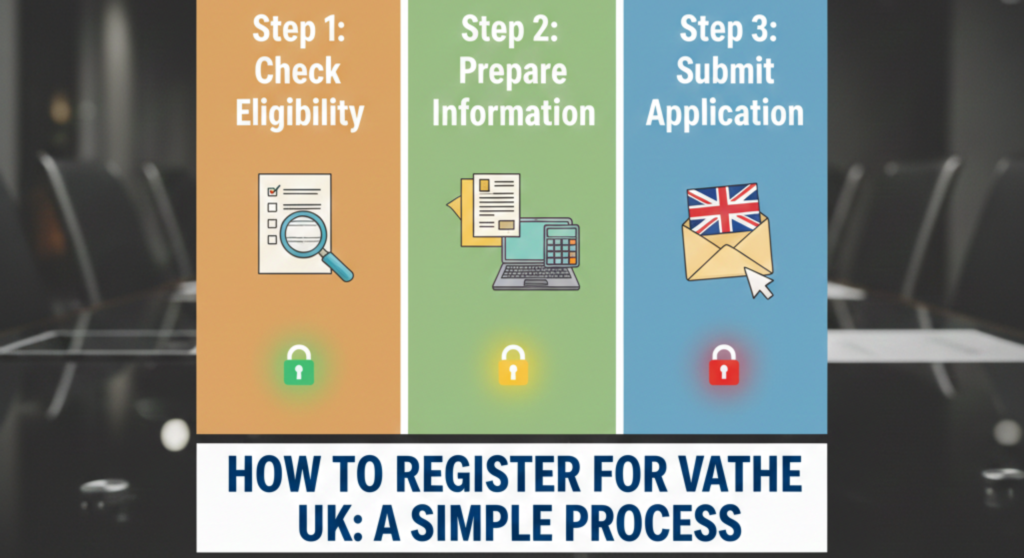
Starting the VAT registration process might seem hard, but it’s easier than you think. It’s important for both new and experienced business owners to know how to register online with HMRC. This ensures you follow the rules.
Before you start the online VAT registration, you need to get your business info ready. This makes the application process smoother through the HMRC VAT system.
Preparing Your Business Information
To start the VAT registration, you’ll need a few things:
- Your unique tax reference number
- Business bank account details
- Precise turnover figures for the past 12 months
- Detailed business activity description
- Contact information for key business personnel
Completing Your HMRC VAT Registration Online
The online registration has a few main steps:
- Create a Government Gateway account if you don’t already have one
- Navigate to the official HMRC VAT registration portal
- Enter your business information carefully
- Review all entered details for accuracy
- Submit your application
After you submit, HMRC usually takes 30 working days to process your VAT registration. They’ll send your VAT number by post. This lets you manage your VAT duties well.
Voluntary VAT Registration: When It Makes Sense
Voluntary VAT registration can be a smart choice for businesses that don’t have to register. It’s important to know when it’s the right move for your business’s growth and financial planning.
Small businesses might choose voluntary vat registration for good reasons:
- Reclaim VAT on business purchases
- Enhance business credibility
- Improve cash flow management
- Prepare for future business expansion
Whether to register voluntarily depends on your business’s situation. Businesses with big VAT costs or those selling to VAT-registered companies often gain the most.
When thinking about voluntary VAT registration, consider these points:
- Input VAT recovery potential
- Administrative responsibilities
- Impact on pricing strategy
- Customer and supplier relationships
Before you decide, look at your business’s finances closely. Check if the VAT you can get back is worth the extra accounting work. Some might find the extra work not worth the benefits.
Start-ups and growing businesses looking to grow fast should think about voluntary vat registration. Getting advice from a professional accountant can help you make the best choice for your business.
Different VAT Schemes Available for UK Businesses
Understanding VAT can be tough for UK businesses. Knowing the different VAT schemes can help you choose the best tax strategy. Each scheme has its own benefits to make accounting easier and lower your taxes.
The Flat Rate VAT Scheme Explained
The flat rate VAT scheme is great for small businesses. You pay a fixed VAT percentage on your sales, not the exact VAT on each sale. This makes accounting simpler for your business.
- Ideal for businesses with an annual turnover under £150,000
- Reduces complex VAT calculations
- Fixed percentage varies by industry sector
With the flat rate vat scheme, you pay a set percentage based on your business type. For example, retailers and service businesses pay different rates. You get to keep the difference between what you charge customers and what you pay HMRC.
Standard VAT Accounting Scheme
The standard VAT accounting scheme is more traditional. It requires precise VAT calculation on each sale and purchase. This gives you detailed financial tracking.
- Detailed VAT tracking for each transaction
- Full VAT reclaim on business purchases
- Suitable for businesses with complex financial operations
Choosing the right VAT scheme depends on your business size, turnover, and financial needs. Talking to a tax expert can help you pick the best scheme for your business.
Time Limits and Deadlines for VAT Registration
Understanding the HMRC VAT registration timeline is key for your business’s finances. Knowing the deadlines helps you avoid fines and keeps tax operations smooth.
If your business hits the VAT threshold, you must act fast. The main time frame for HMRC VAT registration is within 30 days after the month when your sales hit £85,000.
Critical Registration Deadlines
- 30-day window from month-end of threshold breach
- Mandatory registration for businesses exceeding £85,000 turnover
- Voluntary registration possible below the threshold
Consequences of Late Registration
Late HMRC VAT registration can lead to big financial problems. The penalties are meant to push businesses to register on time. They can be quite high.
| Delay Period | Potential Penalty |
|---|---|
| 1-9 months late | 5-10% of unpaid VAT |
| 9-12 months late | 10-15% of unpaid VAT |
| Over 12 months late | 15-20% of unpaid VAT |
If you find out you should have registered earlier, contact HMRC. They might be lenient if you tell them and show you’re trying to comply.
Protecting Your Business
Keep good financial records and watch your sales closely. Set up alerts to remind you when you’re near the VAT threshold. Being proactive can prevent fines and keep your business healthy.
What Happens After You Apply for a VAT Number
After you apply for a VAT number with HMRC, you’ll wait for a bit. The time it takes to get your VAT registration can be 2-4 weeks. This depends on how complete your application is.
When HMRC approves your application, you’ll get a VAT registration certificate. This certificate has important details about your VAT registration. It includes:
- Your unique VAT number
- The effective date of registration
- Your business’s specific VAT scheme
Getting a VAT number means you have to start charging VAT on sales. You also need to put your VAT number on invoices and official documents. You’ll have to update your accounting systems, too.
If HMRC needs more info, they’ll get in touch with you. It’s important to respond quickly to avoid delays. Being prepared and accurate is crucial for a smooth process.
After getting your VAT certificate, you should:
- Tell your customers about VAT-inclusive pricing
- Update your invoicing software
- Start keeping good records
- Get ready for quarterly VAT returns
Knowing these steps helps your business smoothly move into VAT compliance.
Managing VAT Returns and Compliance Requirements
Handling VAT returns can be tough for UK businesses. It’s key to know your duties to stay compliant and avoid fines. Your VAT returns are a major financial report that needs your full focus and accurate records.
When dealing with VAT returns, you’ll need to focus on several key areas:
- Calculating your VAT liability accurately
- Submitting returns within prescribed deadlines
- Maintaining digital records
- Tracking input and output VAT
The Making Tax Digital (MTD) initiative has changed VAT return handling. You must now use compatible software for electronic submissions. This digital method makes things clearer and cuts down on VAT reporting mistakes.
Your quarterly VAT returns need detailed records of all business deals. You’ll have to:
- Calculate total sales (output VAT)
- Determine reclaimable purchase VAT (input VAT)
- Compute the net VAT amount payable
- Submit your return online through HMRC’s portal
Being well-organised and proactive with your VAT returns can prevent financial shocks and HMRC penalties.
Common VAT Registration Mistakes to Avoid
Getting through the VAT registration process can be hard for UK businesses. Knowing the common mistakes helps you avoid them. This way, you can register for VAT without any issues.
When you hit your UK VAT threshold, several mistakes can make things complicated. Spotting these errors early can save your business a lot of time and money.
Documentation Errors That Derail Your Registration
Getting your VAT registration documents right is key. Some common mistakes include:
- Submitting incomplete business information
- Providing incorrect bank details
- Presenting inconsistent financial dates
- Failing to include all required supporting documents
Miscalculating Your Business Turnover
Getting your turnover right is vital to know if you’ve hit the VAT threshold. Businesses often make these mistakes:
- Including exempt supplies in turnover calculations
- Overlooking specific income sources
- Misunderstanding the 12-month rolling period calculation
- Incorrectly tracking cumulative business revenue
Double-checking your financial records can stop these mistakes. Make sure your documents are correct and keep a close eye on your finances. This will help your VAT registration go smoothly.
Conclusion
Understanding VAT registration online might seem hard, but it’s key for your business’s health. By watching your turnover and knowing your VAT duties, you can follow HMRC rules.
Small businesses need to watch their taxable turnover closely. If you’re near the VAT limit, getting ready for VAT registration online can avoid fines. Every business is different, so think about your own needs before you act.
The VAT registration process doesn’t have to scare you. Use HMRC’s help and talk to accountants to handle your taxes well. Knowing when to register for VAT is important for your business’s growth and money management.
Being informed and following the rules can shield your business from surprises. Always check your turnover, get your papers ready, and tackle VAT registration with confidence and planning.