Are you confused about VAT exempt goods and services in the UK? Knowing about these tax rules can save your business a lot of money. It helps avoid big financial problems.
VAT exemption is key to managing your finances well. Many business owners miss this important point. Learning about vat exempt goods and services opens up a world of tax rules. These rules can greatly affect your business’s money management.
This guide will cover all you need to know about VAT exemption. You’ll find out how different goods and services are taxed in the UK. This knowledge helps you make smart choices about your business’s money.
We’ll explain VAT exemptions for financial services and healthcare. Our aim is to give you clear, useful information. This will help you understand these tax rules better.
Whether you run a small business or work in finance, knowing about vat exempt goods and services is vital. It helps you stay in line with tax laws and plan your finances better.
Understanding VAT Exemption in the United Kingdom
Value Added Tax (VAT) can be tricky for UK businesses. Knowing about VAT exemption is key for your finances and taxes.
Businesses need to grasp vat exemption criteria. This helps manage tax duties well. Exempt supplies have their own rules and financial effects.
What Does VAT Exemption Mean?
VAT exemption gives special status to certain goods and services in the UK. If you offer exempt supplies, you don’t have to charge VAT. But you can’t get back VAT on costs for these supplies.
- No VAT charged to customers
- No VAT recovery on input costs
- Potential impact on business pricing strategies
The Difference Between VAT Exemption and Zero-Rating
Many confuse VAT exemption with zero-rating. But they’re different. Both mean no VAT to customers, but zero-rating lets you get back VAT on costs.
- Exempt Supplies: No VAT charged, no input VAT recovery
- Zero-Rated Supplies: No VAT charged, input VAT can be reclaimed
Knowing vat exemption criteria is essential for good financial planning and tax compliance in your business.
VAT Exempt Goods and Services
Understanding VAT-free services in the UK can be tricky for businesses. Knowing which goods and services don’t have VAT is key for staying on the right side of the law and planning well.
VAT exemption is for certain sectors that are vital or very important to society. These vat-free services cover many areas, each with its own rules and features.
- Financial services
- Healthcare provisions
- Educational programmes
- Certain property transactions
- Cultural and charitable activities
If a service is VAT exempt, businesses can’t charge VAT on it. This means you can’t get back VAT you paid for these exempt goods and services.
Important things to think about for vat-free services include:
- Knowing the exact rules for exemptions
- How it affects your business’s financial reports
- Limitations on getting back input VAT
- Following HM Revenue & Customs rules
Your business needs to check if any of its services are VAT exempt. This is to make sure you’re handling taxes right and to avoid fines.
Key Categories of Exempt Supplies
Understanding exempt supplies can be tricky for businesses. Knowing which supplies are VAT-free is key to staying on the right side of the law. In the UK, there are several important areas where these supplies are common.
Businesses often find themselves dealing with exempt supplies in three main areas. Each has its own rules and requirements:
- Financial and Insurance Services
- Health and Medical Services
- Education and Training Provisions
Financial and Insurance Services
Many financial deals are VAT-free, helping both consumers and businesses. This includes:
- Credit and lending services
- Insurance policy arrangements
- Investment management
- Certain banking transactions
Health and Medical Services
The healthcare sector gets a big break from VAT to make medical care more accessible. Registered healthcare professionals can offer services without VAT. This includes:
- Doctors and general practitioners
- Dentists
- Opticians
- Physiotherapists
- Registered nurses
Education and Training Provisions
Schools, colleges, and universities get a VAT break for certain courses. These must meet specific criteria to be VAT-free.
Grasping these exempt supplies categories is vital for businesses. It helps them follow VAT rules, avoid fines, and keep their finances healthy.
Understanding VAT Exemption Criteria
Understanding vat exemption criteria in the UK can be tricky for businesses. It’s not just about saying a product or service is exempt. HMRC has strict rules to check if a transaction is VAT-exempt.
To grasp vat exemption criteria, you must look at several important points:
- Nature of the supply
- Status of the supplier
- Purpose of the transaction
- Relationship between the involved parties
Not every supply is automatically exempt. Businesses must check their activities against certain rules. These rules are detailed and not just about categorising things.
| Criteria Category | Key Considerations |
|---|---|
| Supply Type | Financial, medical, and educational services |
| Business Context | Specific industry regulations |
| Transaction Purpose | Charitable, public benefit activities |
Your records are vital in proving vat exemption criteria. Keeping detailed records is important. Proper evidence is key to demonstrating compliance.
Knowing these detailed rules helps avoid expensive errors. It ensures your business follows UK tax laws.
Zero-Rated VAT vs VAT Relief: Clarifying the Distinctions
Understanding VAT can be tricky for businesses and individuals. Zero-rated VAT and VAT relief are two different concepts. They might seem alike, but they have big differences that affect your money planning.
How Zero-Rated VAT Works
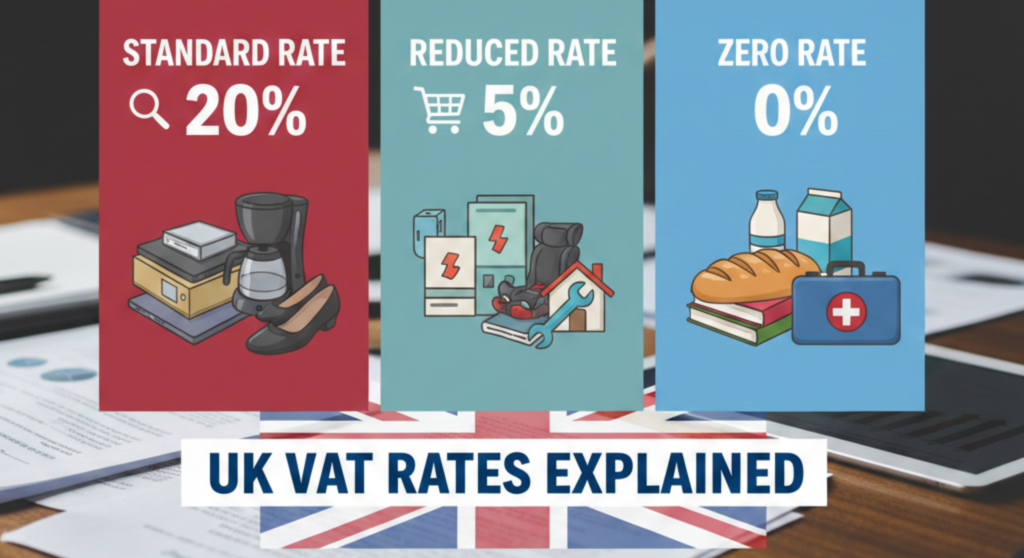
Zero-rated VAT is for certain goods and services that are taxed but cost 0%. This lets you get back VAT on what you bought. Some examples include:
- Most food items
- Children’s clothing
- Books and newspapers
- Certain medical supplies
When you sell these items, you don’t charge customers VAT. But you can still get back VAT on what you bought. This is different from VAT exemption, where you can’t get back VAT.
When VAT Relief Applies
VAT relief is for special cases where you get lower rates or special rules. These include:
- Reduced rate supplies (charged at 5%)
- Relief schemes for charities
- Special provisions for disabled persons
Knowing these differences helps you deal with complex tax rules. It ensures you manage your money well and follow UK tax laws.
Tax-Free Products and Common Misconceptions
Understanding tax-free products can be tricky for businesses and shoppers. It’s key to know the difference between VAT exemption, zero-rating, and truly tax-free items. This knowledge helps in making smart financial choices.
It’s important to remember that not all products are the same when it comes to taxes. Many people think some goods are automatically tax-free, but this isn’t always true.
- Some products appear tax-free but still incur standard VAT rates
- Certain essential goods may have special tax classifications
- Context and specific regulations determine tax treatment
Many people get confused about tax-free products because of VAT rules. For example, healthcare and educational supplies might seem simple, but their tax status can be complex.
| Product Category | VAT Status | Common Misconception |
|---|---|---|
| Medical Equipment | Zero-rated | Not always completely tax-free |
| Children’s Clothing | Zero-rated | Exempt from all taxes |
| Financial Services | Exempt | Considered tax-free products |
Knowing these details can help you avoid VAT accounting mistakes. Always check HMRC guidelines or talk to a tax expert to make sure you understand tax rules for certain products.
Being aware of these differences can protect your business from expensive errors and fines related to tax-free products and VAT rules.
HMRC VAT Guidance for Businesses
Understanding VAT rules is key for businesses. They must follow HMRC vat guidance closely. This helps avoid fines and keeps finances running smoothly.
The HMRC offers detailed help for VAT rules. It’s vital to keep up with new laws. This ensures financial accuracy and legal standing.
Navigating VAT-Free Services Compliance
Businesses need to track exempt and taxable services well. Important points include:
- Figuring out which services are VAT-free
- Understanding partial exemption rules
- Knowing when to register for VAT
- Reporting exempt supplies correctly
HMRC vat guidance stresses the need for accurate activity categorisation. Getting it wrong can cause big financial problems.
Record-Keeping Requirements
Keeping accurate financial records is crucial for VAT compliance. HMRC wants businesses to have:
- Clear categorisation of supplies
- Detailed financial records
- Proof of VAT treatment
- Records kept for at least six years
Businesses should keep all important documents for at least six years. This includes invoices, receipts, and financial statements. These support VAT reports and future audits.
The Impact of VAT Exemption on Your Business
Understanding the financial effects of vat exempt goods and services is key for your business strategy. VAT exemption might look good at first, but it can really affect your profits and how you run things.
Dealing with vat exempt goods and services brings several big challenges:
- You can’t get VAT back on related buys
- Operational costs might go up
- Accounting gets more complicated
- It can limit your financial options
Your pricing needs to account for the hidden costs of VAT exemption. Businesses often find that exempt supplies lead to unexpected VAT costs.
| Business Consideration | VAT Exemption Impact |
|---|---|
| Input VAT Recovery | Not Possible |
| Pricing Flexibility | Reduced |
| Administrative Complexity | Increased |
Strategic planning is vital when handling vat exempt goods and services. You might need to look into different business setups or opt to tax some supplies to improve your VAT situation.
By carefully looking at your business model, you can tackle VAT exemption’s challenges. This ensures you make smart choices that safeguard your finances.
UK VAT Rules: Staying Compliant with Exempt Supplies
Understanding UK VAT rules for exempt supplies is tough for businesses. It’s key to avoid fines and keep your finances right.
Businesses with exempt supplies must watch VAT rules closely. The UK VAT rules need careful tax management, especially across different supply types.
Partial Exemption Considerations
Partial exemption is important when you offer both taxable and exempt supplies. Here’s what you need to know:
- Calculate your recoverable input VAT accurately
- Understand the standard and special methods of calculation
- Monitor your VAT position regularly
| Calculation Method | Key Characteristics |
|---|---|
| Standard Method | Based on the turnover ratio of taxable supplies |
| Special Method | Tailored approach approved by HMRC |
Your business must track taxable and exempt supplies carefully. The de minimis limit lets you recover all input VAT if your exempt supplies are below a certain level.
Regularly checking your partial exemption position helps avoid surprise tax bills. HMRC needs clear records and reports to check you’re following UK VAT rules.
Conclusion
Understanding VAT exempt goods and services is complex but crucial for your business. Knowing these rules can greatly affect your finances. It’s important to know the differences between VAT exemption, zero-rating, and standard VAT to manage taxes well.
Success comes from regularly checking your VAT status and supplies. VAT exempt items can pose challenges, especially with input tax recovery. Getting help from a tax expert can clarify HMRC rules and ensure you’re doing things right.
Start by checking if your supplies meet exemption criteria. Make sure your accounting systems can handle different VAT treatments. Keep detailed records and stay updated on VAT rule changes that might impact your business.
VAT compliance is an ongoing task. If you’re unsure, seek expert advice. Use HMRC resources to keep your business in line with tax laws. By staying informed and careful, you can avoid financial risks and have a strong tax plan for your business.