Are you sure your business’s VAT invoices follow all UK laws? Knowing what’s needed for VAT invoices can avoid big problems.
A VAT invoice is more than a bill. It’s a key financial document that lets customers get back tax they paid. It also shows you follow HMRC rules. Whether you’re new to VAT or have been around for a while, getting VAT invoices right is key.
In this detailed guide, you’ll learn all about making VAT invoices that meet the law. We’ll cover everything from what info you must include to how to do digital invoices. We aim to make VAT invoice rules easy to understand, so you can handle your taxes with confidence.
Knowing about VAT invoices can keep your business safe from money troubles. It shows you’re serious about good financial practices. Let’s look at the important parts of a VAT invoice. It’s not just a piece of paper; it’s a vital part of your business’s money plan.
Understanding VAT and Your Business Obligations
Dealing with Value Added Tax (VAT) in the UK can be tough for businesses. It’s key for business owners to know their VAT duties. This helps keep tax in order and avoids fines.
Managing a vat-registered business means keeping up with tax rules and financial reports. The UK tax system has clear rules for VAT registration.
What Makes a Business VAT-Registered
Your business must meet certain conditions to be VAT-registered:
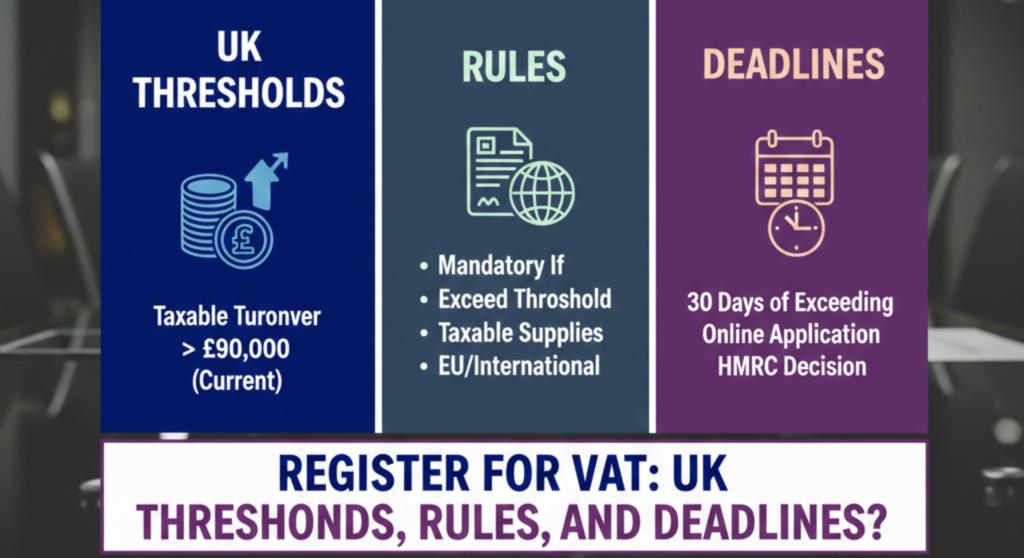
- Reaching the annual turnover threshold of £85,000
- Expecting to exceed the threshold within the next 30 days
- Choosing voluntary registration before reaching the threshold
HMRC says businesses must sign up for VAT within 30 days of meeting these criteria. Voluntary registration can help with reclaiming VAT and looks good to clients.
When You Must Charge VAT
Knowing when to charge VAT is key for tax compliance. Different goods and services have different VAT rates:
| VAT Rate | Description | Examples |
|---|---|---|
| Standard Rate (20%) | Most goods and services | Electronics, furniture |
| Reduced Rate (5%) | Special category items | Home energy, child car seats |
| Zero Rate (0%) | Specific essential items | Most food, children’s clothing |
As a VAT-registered business, you must pick the right VAT rate for each sale. Accurate VAT reporting keeps your business safe from money troubles and ensures tax compliance.
What Is a VAT Invoice
A VAT invoice is a key financial document in the UK. It’s vital for businesses that are VAT-registered. Knowing about VAT invoices helps keep financial records right and follow HMRC rules.
VAT invoices are important for businesses. They show what goods or services were sold and the VAT paid. This document is more than just a receipt. It’s a legal must that helps track tax duties for both businesses and customers.
- Provides evidence of VAT paid
- Serves as an official business record
- Enables input tax reclamation for VAT-registered customers
- Demonstrates compliance with HMRC guidelines
You must issue a VAT invoice within a certain time. You should do this within 30 days of supplying goods or services. Or, if you get paid first, within 30 days of that. The invoice must have certain details, as tax rules say.
| VAT Invoice Component | Required Details |
|---|---|
| Business Information | Company name, address, VAT registration number |
| Transaction Details | Date of supply, itemised description of goods/services |
| Financial Information | Total amount, VAT rate, VAT amount |
Issuing a correct VAT invoice is not optional for registered businesses. Not doing so can lead to fines. It might also stop customers from getting back their input tax.
The Difference Between Standard Invoices and VAT Invoices
For UK businesses, knowing about invoicing is key. Not all invoices are the same, especially for VAT. A standard invoice and a VAT invoice look similar but are very different. This difference is important for following tax rules.
When you handle your business money, knowing the difference between standard and VAT invoices is vital. It helps avoid tax problems.
Key Features That Set VAT Invoices Apart
VAT invoices have special needs that make them more than just a UK VAT receipt:
- Mandatory VAT registration number display
- Unique sequential invoice numbering
- Separate VAT amount calculation
- Clear indication of applicable VAT rate
These extra details turn a simple invoice into a legal document. It helps with tax reporting.
When a Simple Receipt Isn’t Enough
Not every deal needs a simple receipt. Transactions over £250 need detailed VAT invoices. This is to allow for tax claims.
| Transaction Type | Invoice Requirements |
|---|---|
| Personal Purchases Under £250 | Simple Receipt Acceptable |
| Business Transactions Over £250 | Full VAT Invoice Required |
Knowing these differences helps your business follow tax rules well. It makes financial management smoother.
Mandatory Information Required on Every VAT Invoice
Creating a VAT invoice needs careful attention to certain details. HMRC has set clear rules for vat invoices that businesses must follow. This ensures proper tax documentation.
Your VAT invoice must have several key elements to be valid. These requirements protect your business and customers. They make financial records clear and transparent.
- Your full business name and registered address
- Your unique VAT registration number
- A clear invoice date
- A unique sequential invoice number
- Customer’s complete name and address
- Detailed description of goods or services
- Quantity of goods or extent of services
- VAT rate for each item
- Total amount excluding VAT
- Specific VAT amount charged
- Total amount including VAT
Some transactions need extra details. For example, zero-rated or exempt supplies might require more documentation. This explains the tax treatment.
Each requirement has a purpose. Sequential numbering stops duplicate invoices. Separate VAT calculation helps customers track their input tax claims.
By following these vat invoice requirements, you’ll make clear, compliant documents. These meet HMRC standards and support your business’s financial transparency.
Your VAT Number and Why It Matters
Knowing your VAT number is key for any business with HMRC. It’s a unique code that’s vital for your financial records and following VAT rules. Your VAT number is more than just numbers; it’s your tax ID in the UK.
When you register for VAT, HMRC gives you a special number. You must use this number on all business invoices and documents. It helps track your business dealings and makes sure you report taxes correctly.
Displaying Your VAT Registration Number Correctly
It’s important to show your VAT number correctly to follow HMRC’s VAT rules. Here’s how to do it:
- Always use the full VAT number exactly as HMRC gives it to you
- Label it clearly as “VAT Reg No:” or “VAT Number:”
- Make sure it’s easy to see on all VAT invoices
- UK VAT numbers usually start with “GB” followed by 9 or 12 digits
Verifying Customer VAT Numbers
Checking customer VAT numbers is vital, especially for international deals. HMRC has an online tool to check if VAT numbers are real.
| Verification Method | Purpose |
|---|---|
| HMRC Online Service | Validate UK and EU VAT numbers |
| EU VAT Information Exchange System | Confirm international VAT registrations |
| Direct Contact with HMRC | Resolve complex verification issues |
By managing your VAT number well and checking customer numbers, you keep your business safe from fraud. This also helps with tax compliance.
Calculating and Displaying VAT on Your Invoices
It’s vital for your business to know how to calculate VAT right. A good vat calculator can make this easier. But it’s also key to understand the basics.
In the UK, most goods and services have a 20% VAT rate. You can calculate VAT in two main ways:
- Calculating VAT on net prices (multiplying net amount by 0.20)
- Extracting VAT from gross prices (dividing gross amount by 1.20)
Your vat calculator should help you handle different VAT rates well. Some items have different rates:
| VAT Rate | Item Categories |
|---|---|
| Standard Rate (20%) | Most goods and services |
| Reduced Rate (5%) | Essential items like children’s car seats |
| Zero Rate (0%) | Basic foodstuffs, books, and children’s clothing |
Make sure to show each VAT rate on your invoices. This means showing the VAT amount for each type. HMRC says you can round down to the nearest penny for each item. But the total VAT must be exact.
When you apply discounts, calculate VAT on the discounted price. This clear VAT display helps build trust with your customers. It also helps avoid any disputes.
Simplified VAT Invoices for Smaller Transactions
Dealing with VAT documents can be tricky. But, simplified VAT invoices make it easier for businesses with smaller deals. They help cut down on paperwork while keeping tax rules in check.
When You Can Issue a Simplified Invoice
There are certain times when you can use a simplified invoice. You can give out a simplified uk vat receipt if your total deal, including VAT, is under £250. This rule is for the whole invoice, helping many businesses.
- Retail businesses
- Cafés and restaurants
- Small service providers
- Temporary event vendors
What Information You Can Omit
Simplified VAT invoices let you skip some details found on regular invoices. You don’t have to list the customer’s full name and address. You can also show the VAT rate instead of the VAT amount itself.
- No need to list customer’s full name and address
- Option to state VAT rate instead of breaking down VAT amount
- Condensed transaction description
Even with these omissions, your simplified UK VAT receipt must have important info. This includes your business name, VAT number, invoice date, and the total amount due, including VAT.
HMRC Guidelines for VAT Invoice Compliance
Understanding HMRC vat regulations is key for your business. You need to know the latest rules to avoid fines. Keeping up with these changes is essential.
The HMRC guidelines offer detailed help for VAT invoicing. It’s vital to grasp these rules for accurate financial records and legal compliance.
- Consult VAT Notice 700 for primary VAT guidance
- Review VAT Notice 700/21 for specific invoicing requirements
- Keep updated with the current HMRC vat regulations
HMRC guidelines cover important areas:
- Invoice issuance timelines
- Correction procedures
- Electronic invoicing rules
- Sector-specific invoicing requirements
| HMRC Guideline Area | Key Requirements |
|---|---|
| Invoice Timing | Issue within 30 days of tax point |
| Electronic Invoicing | Customer consent mandatory |
| Self-Billing | Specific agreement required |
While these guidelines are helpful, your business might need special advice. Always check the official HMRC documents or get tax advice. This ensures you follow vat regulations correctly.
Common Mistakes That Affect Input Tax Claims
Dealing with VAT invoicing needs to be precise. Small mistakes can hurt your input tax claim a lot. It’s key to know these common errors to keep your invoices in order.
Big mistakes often happen when VAT invoices are wrong. These can stop your business from getting back input tax. They can also harm your professional relationships.
Critical Errors in VAT Invoice Documentation
- Omitting the VAT registration number completely
- Failing to separate VAT amounts from net prices
- Using non-sequential or duplicate invoice numbers
- Insufficient description of goods or services
Some mistakes can be fixed later, but others might make the invoice useless. This can cause more than just a hassle.
Problematic Invoice Examples
| Error Type | Impact on Input Tax Claim |
|---|---|
| Gross total without VAT breakdown | Complete claim rejection |
| Missing supplier business details | Potential claim invalidation |
| Incorrect VAT calculation | Partial or full claim denial |
Checking invoices carefully before sending them out can stop these big mistakes. Your business’s reputation relies on paying close attention to VAT invoice details.
Good invoice management is not just about avoiding HMRC fines. It’s also about making sure your business customers can easily get back VAT.
Digital Invoicing and Making Tax Digital Requirements
Digital invoicing has changed how UK businesses handle taxes. The Making Tax Digital (MTD) initiative makes VAT-registered companies use electronic records and reports. You must use software that fits these digital needs for your invoices and VAT.
When you start digital invoicing, you must follow HMRC’s rules. Important things to remember include:
- Capturing all mandatory invoice information electronically
- Using software that integrates with HMRC systems
- Maintaining accurate digital records
- Ensuring customer consent for electronic invoices
MTD-compatible software brings big benefits for tax rules. It automatically works out VAT, gives sequential invoice numbers, and keeps detailed digital records. This means fewer mistakes and easier financial management.
Going digital with invoices is more than just following rules. It also brings real benefits like quicker payments, lower postage costs, and better document access. By adopting digital invoicing, you’re not just meeting HMRC’s needs. You’re also updating your financial practices.
Starting with digital invoicing might seem hard, but many accounting software packages are now ready for MTD. Choosing the right tech will make tax reporting easier and boost your business’s efficiency.
Conclusion
As a VAT-registered business, knowing how to handle VAT invoicing is key. It keeps you legal and financially sound. Your invoices are more than just records; they’re a way to talk to customers and tax authorities.
By following the tips in this guide, you can make VAT invoicing easier. Make sure your invoices have all the needed info, calculate VAT right, and know when to use simple invoices. This helps avoid fines.
It’s important to check your invoices often and keep up with HMRC rules. Think about using invoicing software that checks for errors and saves time. This makes your finances easier to manage and shows you’re serious about being transparent.
Learning about VAT invoicing is about making clear, correct records for your business. With regular practice and focus on details, you’ll handle these rules well. This keeps your invoicing system strong and up to date.